Happy Friday!
Lots of pretty nerdy stuff this time of year to talk about.
Plus, I haven’t done as much with the wider community since I have been focusing on the YouTube launch scheduled for the 22nd. Just gotta focus in for a few months.
That being said, it is interesting stuff if you are into it!
First, though, the YouTube videos will be very beginner-focused at launch. What would you want to see and/or what do you get asked about the most?
What areas do you have the most questions or get the most?
If the question burning on your mind isn’t on there, feel free to shoot me a message or email! I’ll get you an answer and if its broad enough get it in a video/post.
Science and Around The World
Sticking with the New Year theme, it is always interesting to see what species are identified each year.
Most of the time, these are re-labels, slight locality variations of existing species, or something along a more boring path.
The Atlantic manta ray is an example, still beautiful and awesome, though.

Atlantic manta ray (Mobula yarae) with a diver off the coast of Mexico. Originally identified as the giant oceanic manta ray (M. birostris), it was later reidentified as M. yarae following Bucair et al., 2025. Photo by Arturo Benavides.
Every once in a while, though, there are some really cool new critters named.
Recently, many of these have come from Southeast Asia, particularly island nations in that region.
This is particularly interesting to me because Papuan Carpet Pythons (Morelia s. harrisoni) are my favorite snake species. (and herping/diving in Papua New Guinea and Indonesia are on my bucket list!)
Sure enough, one of the most interesting finds for 2025 is from the region, specifically Thailand.
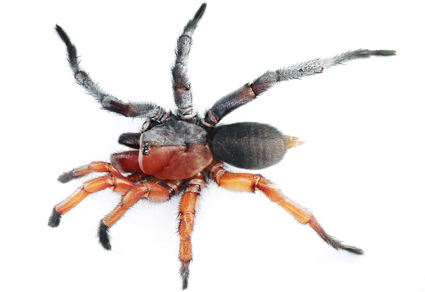
A spider that is half male and half female…as in literally split down the middle!

A Damarchus inazuma specimen displaying gynandromorphism. Credit: Zootaxa (2025). DOI: 10.11646/zootaxa.5696.3.6
Outwardly obvious sexual dimorphism (differences between males and females) is pretty standard in the animal kingdom and especially in spiders.
However, the gynandomorphism in specimens from the newly identified Damarchus inazuma sp. in Thailand is really rare and pretty weird!
Gynandomorphism is when there are distinct characteristics of each sex displayed in either a split like this or in the form of tissues that are distinct from each other but still combined.
Here is some further reading:

Hobby and Industry News
These sorts of things may not feel like a matter to all of us, but can have wide-ranging implications for the exotic pet hobby.
A notable this year is the Chilean Rose Turantula (Grammostola rosea) which was added to Appendix II, meaning that they will be more strictly controlled in export.
If you don’t already, make sure you are supporting organizations like USARK and RRK, they do a ton to preserve our ability to keep the hobby alive!


From MHI
Not a lot from me this week since ALL the focus is on getting the first batch of videos ready.
The dad jokes will continue, though, and I’m not sorry…
Since the reader base is starting to grow, I promise to do my best to include the behind-the-scenes sneak peeks I promised next week!
Until then, take care.
Will